
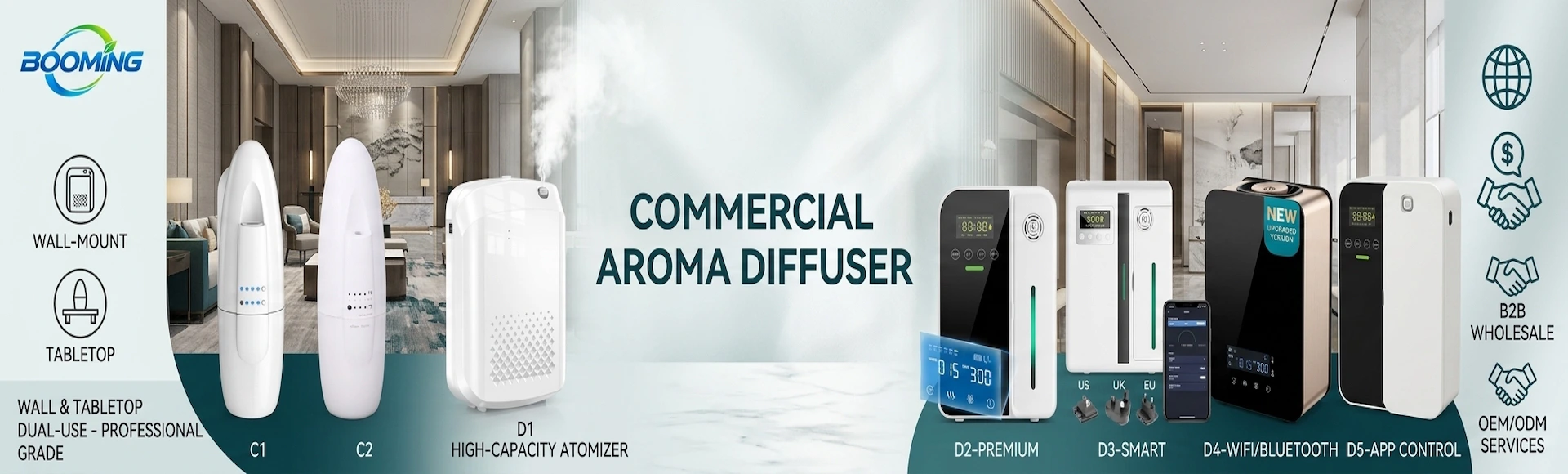
Creating a pleasant and memorable atmosphere is becoming increasingly important for hotels, offices, retail stores, shopping malls, and other commercial spaces. A well-designed scenting solution can enhance the customer experience, strengthen brand identity, and make indoor environments more inviting.
When choosing a commercial scenting system, businesses typically consider two main options: an HVAC diffuser and a floor diffuser.
Although both systems are designed to distribute fragrance into indoor spaces, they differ in installation, scent distribution, coverage, maintenance, and overall application.
So, which one is better for your business?
In this guide, we compare HVAC and floor aroma diffusers to help distributors, wholesalers, and commercial project buyers make an informed purchasing decision.
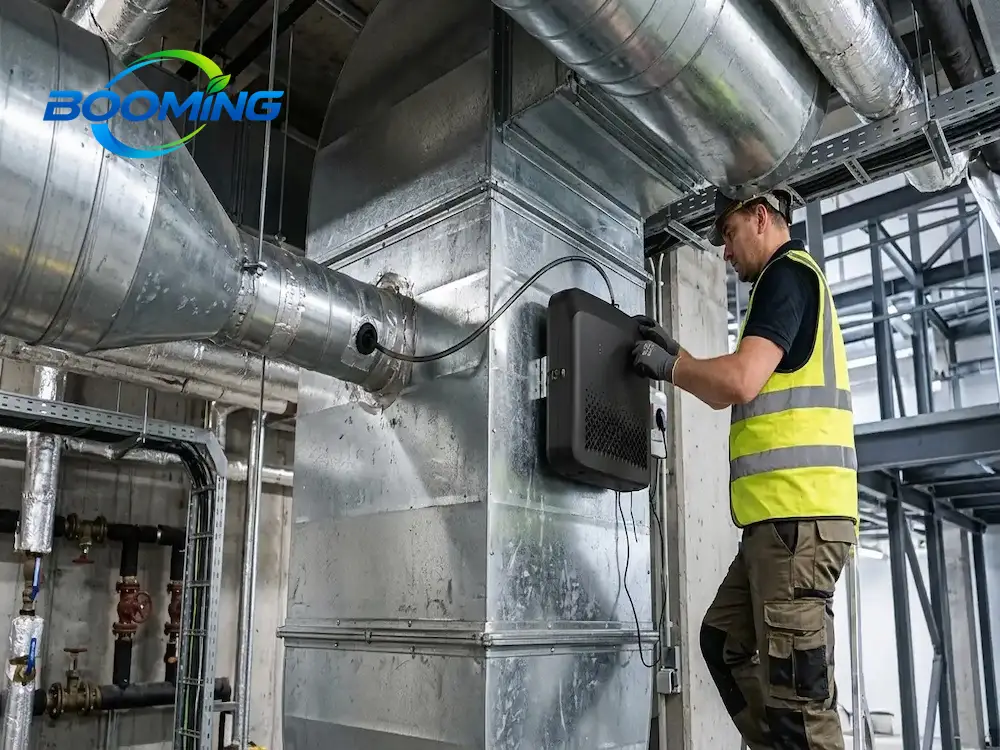
Instead of distributing fragrance directly into a room, the device is connected to the HVAC ductwork. It disperses fragrance into the airflow, allowing the HVAC system to distribute the scent through connected ventilation outlets.
Most commercial HVAC scenting systems use cold-air nebulization technology to convert fragrance oil into fine particles without heating or diluting it with water.
Centralized scent distribution: Delivers fragrance through existing ventilation ductwork.
Large-area applications: Suitable for buildings with compatible centralized HVAC infrastructure.
Concealed installation: The main equipment can be installed in a mechanical room or other designated technical area.
Centralized management: Certain models support programmable operating schedules and adjustable fragrance output.
Professional installation: Requires compatibility checks and proper installation within the HVAC diffuser system.
HVAC diffusers are commonly used in:
Hotels and large hospitality facilities
Shopping malls and department stores
Office buildings and corporate headquarters
Airports and convention centers
Large retail chains and commercial complexes
For businesses looking to create a consistent scent experience across multiple connected areas, HVAC scenting can be an effective solution.
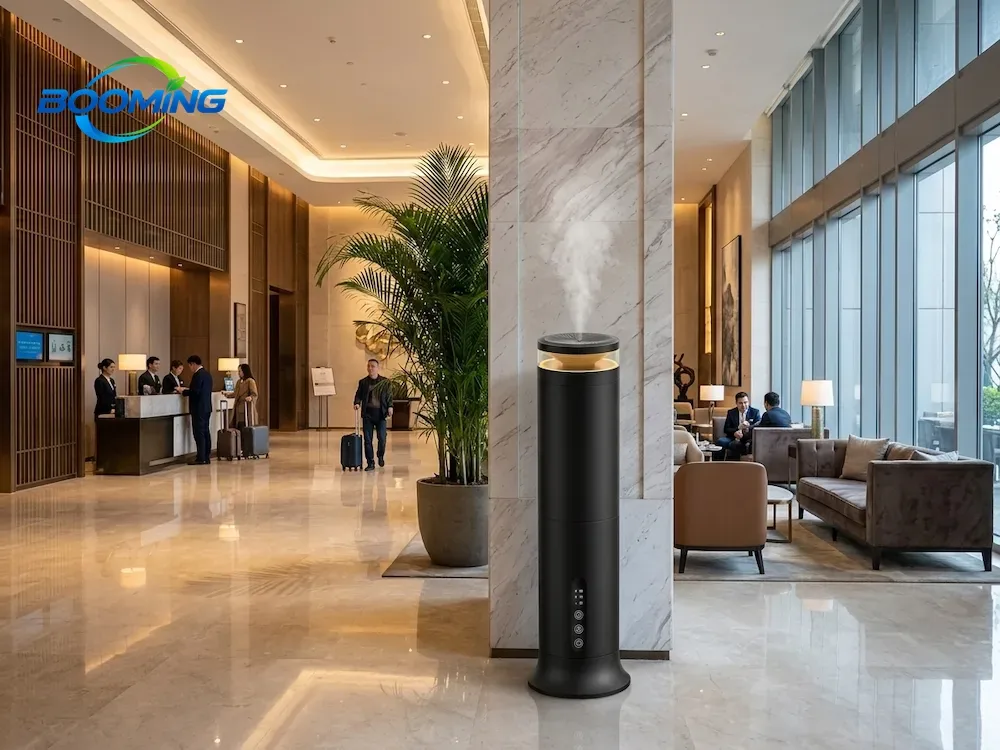
A floor diffuser is an independent scenting device that operates without connecting to a building's HVAC ductwork.
It disperses fragrance directly into the surrounding environment and can be installed in a specific room or commercial area.
Commercial standalone aroma diffusers are available in different sizes, designs, and fragrance output capacities. Depending on the model, they can serve small reception areas, retail stores, hotel lobbies, showrooms, and other commercial spaces.
Many commercial models use cold-air diffusion technology to disperse fragrance oil without adding water or using heat.
Independent operation: Does not require integration with an HVAC system.
Flexible placement: Can be positioned in suitable locations according to the room layout.
Simpler installation: Generally requires less installation work than duct-connected systems.
Flexible scent control: Output settings can be adjusted according to the environment and equipment capacity.
Scalable deployment: Multiple units can be placed in different rooms or zones when necessary.
Floor diffusers are suitable for:
Hotel rooms and reception areas
Retail stores and boutiques
Offices and meeting rooms
Beauty salons and spas
Restaurants and showrooms
Residential and hospitality environments
For businesses that need flexible installation and localized fragrance distribution, standalone diffusers are often a practical choice.
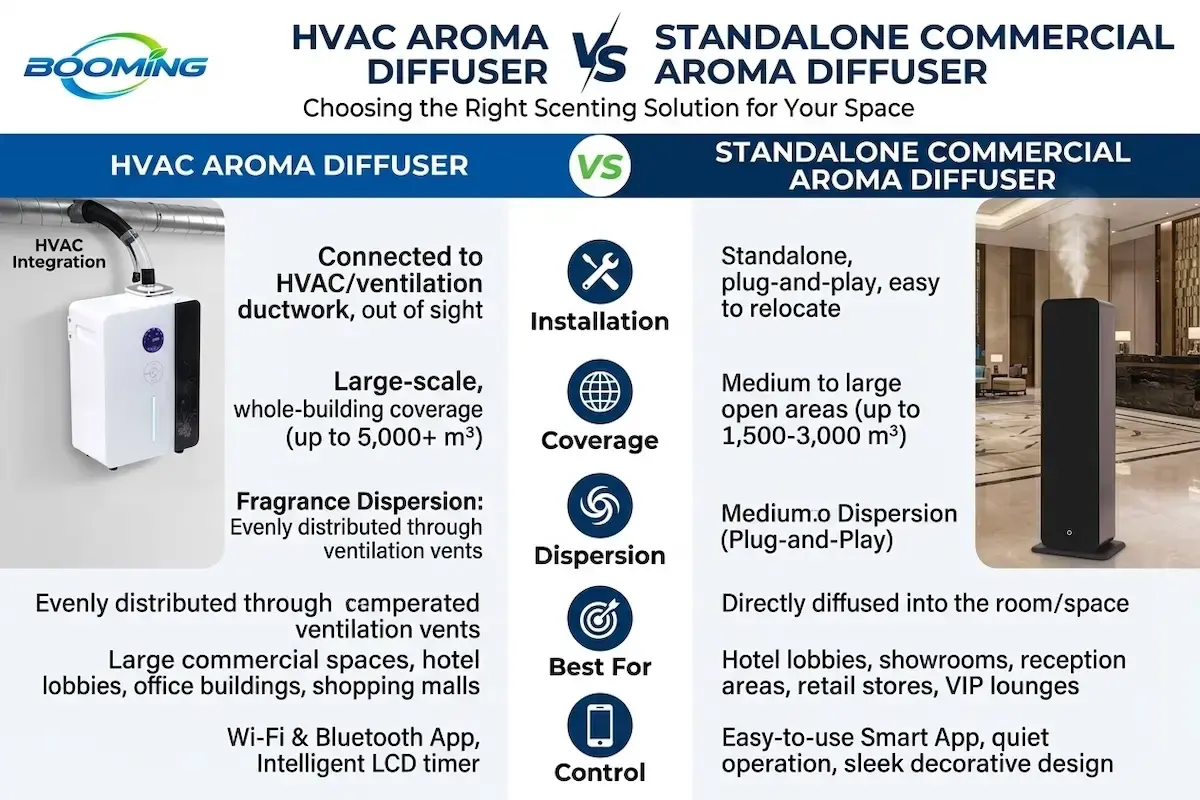
Although both systems can use cold-air nebulization technology, their installation methods and application scenarios are quite different.
Here is a side-by-side comparison of their main characteristics.
| Comparison | HVAC Aroma Diffuser | Floor Diffuser |
|---|---|---|
| Installation | Connected to HVAC ductwork | Independent installation |
| Scent distribution | Through ventilation airflow | Directly into the surrounding space |
| Coverage | Multiple connected areas, depending on HVAC design | Localized areas based on model capacity |
| Installation complexity | Requires professional integration | Generally simpler |
| Initial installation cost | May involve additional ductwork and labor costs | Usually lower installation costs |
| Maintenance | Requires equipment and connection checks | Generally easier to access and maintain |
| Flexibility | Depends on HVAC infrastructure | Flexible placement |
| Best applications | Large buildings and centralized projects | Individual rooms and commercial zones |
Important: Actual coverage and performance depend on the diffuser's output capacity, fragrance formulation, room layout, ventilation conditions, ceiling height, and other environmental factors. There is no universal coverage figure that applies to every model.
There is no single best solution for every business. The right choice depends on your building infrastructure, space requirements, installation budget, and scenting objectives.
Hotels often have different scenting requirements across guest rooms, corridors, reception areas, restaurants, and public spaces.
An HVAC aroma diffuser can be suitable for centralized scent distribution in large connected areas. However, standalone commercial aroma diffusers may offer greater flexibility for individual lobbies, reception desks, and separate functional areas.
For larger hospitality projects, a combination of both systems may be worth considering.
Large shopping malls with centralized ventilation systems may benefit from HVAC scent system for selected common areas.
For individual retail stores, boutiques, and independent shopping units, standalone aroma diffusers are often easier to install and manage.
They also allow individual businesses to choose different fragrances according to their brand identity.
For large office buildings with centralized HVAC infrastructure, duct-connected scenting systems can distribute fragrance across selected ventilation zones.
For smaller offices, meeting rooms, reception areas, and coworking spaces, standalone diffusers provide a more flexible alternative.
These businesses often need localized scent control to create a specific atmosphere.
Standalone commercial aroma diffusers are generally more convenient because they can be positioned according to the room layout and adjusted independently.
Before purchasing a commercial scenting system, businesses should evaluate more than just the equipment price.
Here are five important factors to consider.
First, determine whether the building has a centralized HVAC system and whether it is suitable for scenting integration.
If there is no compatible ductwork, a standalone diffuser is usually the more straightforward option.
Consider the actual space that needs fragrance distribution.
A single standalone unit may be sufficient for a smaller area, while larger spaces may require multiple units or a centralized HVAC solution.
Always check the manufacturer's recommended coverage specifications rather than relying on general estimates.
HVAC systems may involve additional installation, duct integration, and professional labor costs.
Standalone diffusers generally require less installation work, although purchasing multiple units for a large building can increase the total investment.
Businesses should compare the total cost of ownership, including fragrance consumption, maintenance, replacement parts, and operating expenses.
Different commercial environments require different fragrance intensities.
Look for equipment with adjustable fragrance output, programmable operating schedules, and suitable control options.
For larger projects, centralized management and zone-based control may also be important.
For importers, wholesalers, and distributors, choosing the right manufacturer is just as important as selecting the right diffuser technology.
Consider the following factors:
Stable product quality and production capacity
Custom product design and appearance
Private labeling and customized packaging
Technical support and spare parts availability
Consistent delivery schedules
Long-term OEM/ODM cooperation
Working with a reliable manufacturer can help distributors build a more competitive product portfolio and serve different customer requirements.
Yes. In many commercial projects, combining both systems can provide greater flexibility.
For example, a hotel may use an HVAC aroma diffuser to distribute fragrance throughout selected public areas while installing floor diffusers in its reception areas, meeting rooms, and independent retail spaces.
This approach allows businesses to achieve broader scent distribution while maintaining localized fragrance control.
The key is to evaluate the building layout, HVAC zones, fragrance requirements, and operating costs before designing the overall scenting solution.
The best choice depends on your business requirements.
Choose an HVAC diffuser if:
You manage a large commercial building.
Your facility has compatible centralized HVAC infrastructure.
You need fragrance distribution across multiple connected areas.
You are planning a centralized commercial scenting project.
Choose a floor diffuser if:
You need an independent scenting solution.
You want flexible equipment placement.
You manage individual rooms, retail stores, or smaller commercial spaces.
You prefer simpler installation and localized fragrance control.
For importers, wholesalers, and distributors, offering both HVAC-compatible and standalone commercial aroma diffusers can help meet the needs of a wider range of customers.
Choosing the right commercial scent machine is only the first step. Finding a reliable manufacturing partner is equally important for long-term business growth.
At BOOMING, we focus on commercial scent machine solutions for international distributors, wholesalers, and business partners.
With OEM/ODM customization capabilities, we support different business requirements, including product appearance, branding, packaging, and product configurations.
Whether you are sourcing standalone commercial scent machine or exploring customized scenting solutions for your market, our team is ready to discuss your requirements.
Contact BOOMING today to explore commercial scent machine solutions for your business.